Shoulder Instability Surgeon in Annapolis, Maryland
A shoulder that has dislocated once is more likely to do it again. For a young athlete in a contact or overhead sport the odds are high, and every repeat event can cost a little more cartilage and bone. The question after a dislocation is rarely whether the shoulder went back in. It is whether it will stay there.
Dr. Benjamin M. Petre is a board-certified orthopedic surgeon, fellowship-trained in sports medicine at The Steadman Clinic in Vail, Colorado. He performs shoulder instability surgery, including arthroscopic Bankart repair and the Latarjet procedure, at Luminis Health Orthopedics in Annapolis, with about 100 shoulder operations a year. He sees athletes from across Anne Arundel County and has served as a team physician for high school, professional, and US national-team athletes.
This guide covers what tears when a shoulder dislocates, who needs surgery and who does not, how Dr. Petre chooses between a Bankart repair and a Latarjet, and what the months after surgery involve.
Anatomy of a Stable Shoulder
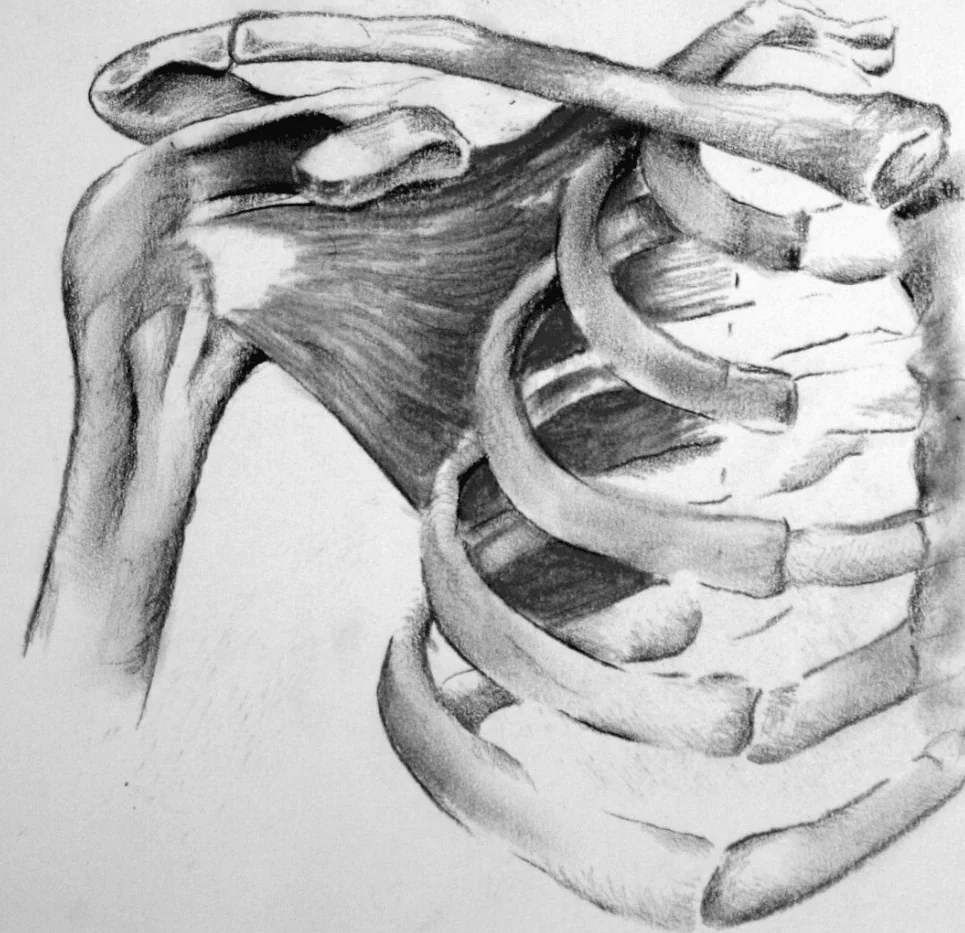
The shoulder trades stability for motion. The ball of the humerus sits against a socket, the glenoid, that is shallow by design, closer to a golf tee than a cup. What keeps the ball centered is soft tissue: the labrum, a fibrocartilage rim that deepens the socket; the capsule and its ligaments, which tighten at the ends of motion; and the rotator cuff, which presses the ball into the socket as you move.
The front and bottom of that ring take the load when the arm is out to the side and rotated back, the position of a throw, a tackle, or a fall onto an outstretched hand. That is where most shoulders fail.
What Is a Bankart Tear?
When the shoulder dislocates forward, the ball is driven over the front rim of the socket, and the labrum and its attached ligaments usually tear away from the bone. That detachment is a Bankart tear. Once the labrum is off the rim, the front of the socket has lost its bumper and its ligament anchor, and the shoulder can slide out again with far less force.
Two other injuries often travel with it:
- Bony Bankart. A piece of the socket rim breaks off with the labrum, or the rim wears away over repeated dislocations.
- Hill-Sachs lesion. A dent in the back of the ball where it was pressed against the socket rim while dislocated.
Not all instability is a full dislocation. A subluxation is a partial slip that goes back on its own, and it can tear the labrum just as a dislocation can. Instability can also run backward (posterior instability, common in football linemen and weightlifters) or in several directions in naturally loose shoulders. Each is evaluated and treated differently.
Why Instability Tends to Get Worse
Each dislocation stretches the capsule and can chip away bone from the socket rim and the back of the ball, making the next one easier. That is why instability tends to be a progressive problem, especially in young athletes in contact and overhead sports. Age at the first dislocation is the strongest predictor: teenagers and athletes in their early twenties re-dislocate far more often than patients over forty.
Older patients have a different risk. After forty, a dislocation is more likely to tear the rotator cuff than to cause repeated instability, so new weakness after a dislocation deserves an MRI. The rotator cuff repair guide covers that injury.
Symptoms
- A dislocation that needed to be put back in, in an emergency room or on the field.
- A shoulder that slips, shifts, or clunks with throwing, reaching overhead, or reaching behind you.
- Apprehension: a sense the shoulder is about to come out when the arm is cocked back, and avoiding that position.
- A dead-arm feeling or a flash of pain after a hit or a hard throw.
- Dislocations that happen with less and less force, sometimes in sleep.
Numbness over the outside of the shoulder, or weakness lifting the arm after a dislocation, should be checked promptly. They point to a stretched nerve or a torn rotator cuff.
Diagnosis
The story does most of the work: how the shoulder came out, how many times, and what it takes now. On examination, apprehension and relocation maneuvers reproduce the instability and show its direction, and the rest of the exam checks for general looseness and rotator cuff strength.
X-rays show the bone: rim fractures, rim wear, and the Hill-Sachs dent. MRI, often with contrast in the joint, shows the labrum and capsule. When bone loss may change the operation, usually after several dislocations, a CT scan measures how much of the socket is missing. That single measurement often decides which procedure is right.
Non-Surgical Treatment
Many shoulders do not need an operation. A first dislocation in a lower-risk patient is usually treated with a short period in a sling for comfort, then physical therapy aimed at rotator cuff and shoulder blade strength and control. Older patients without a cuff tear, and athletes in non-contact sports, often do well this way.
In-season athletes sometimes return to play in a brace and plan surgery for the off-season. That is a reasonable choice in the right athlete, made with eyes open: each further dislocation can add damage, and a second event in season usually ends the experiment.
Who Is a Candidate for Surgery?
Stabilization is recommended when the shoulder keeps coming out, or when the risk that it will is high enough that waiting costs more than operating. In practice that means:
- Recurrent dislocations or subluxations despite a genuine course of therapy.
- A first dislocation in a young athlete in a contact, collision, or overhead sport. That athlete has a high chance of dislocating again, and each recurrence costs bone and cartilage, which is why stabilization is often recommended earlier in that group.
- A bony Bankart or meaningful bone loss on imaging.
- Instability that interferes with work, sleep, or daily life.
The second decision is which operation. That depends mostly on bone.
Bankart Repair or Latarjet?
The key fork in the road is bone. If the socket rim is intact, the torn labrum can be repaired arthroscopically. If repeated dislocations have worn away a meaningful portion of the rim, repairing soft tissue alone fails too often, and the deficient bone has to be addressed.
Arthroscopic Bankart repair
Through small portals, the labrum is freed from where it has scarred, the rim is prepared, and the labrum and ligaments are reattached to the socket with suture anchors, re-tensioning the stretched capsule at the same time. When the Hill-Sachs dent is large enough to catch on the rim, it can be filled with tendon and capsule in the same operation, a step called remplissage.
Latarjet procedure
The Latarjet transfers a small block of bone, the coracoid, with its attached tendon to the front of the socket through an open incision. It rebuilds the missing rim, and the tendon acts as a sling across the front of the joint when the arm is in the throwing position. It is chosen for significant bone loss, and often when a previous soft-tissue repair has failed.
Posterior and multidirectional instability
Shoulders that slip backward are treated with an arthroscopic repair of the back of the labrum and capsule. Shoulders that are loose in several directions are treated first and foremost with therapy, and with a capsular tightening procedure only when a long, well-run program has not held.
Preparing for Surgery
- Stop nicotine in every form. It impairs healing of the labrum to bone and of the Latarjet bone block.
- Hold anti-inflammatories and blood thinners as directed in your pre-op instructions.
- Set up physical therapy before surgery day; early protected motion is scheduled, not improvised.
- Arrange button-up or zip-front shirts, a recliner or wedge pillow for sleeping more upright, and a driver.
- Review our preparing for major shoulder surgery checklist for what to have at home and what to bring.
The Procedure, Step by Step
- Anesthesia. General anesthesia with a regional nerve block that handles most of the first day's pain.
- Arthroscopy and survey. Through small portals the whole joint is inspected: the labrum all the way around, the socket rim, the Hill-Sachs dent, the biceps anchor, and the rotator cuff.
- Repair. For a Bankart repair, the labrum is mobilized, the rim is freshened to bleeding bone, and the labrum and ligaments are secured with suture anchors, working from the bottom of the socket upward and tightening the capsule as each anchor is placed. For a Latarjet, the coracoid is moved through a short incision at the front of the shoulder and fixed to the socket rim with two screws.
- Closure. Portals or the incision are closed and the arm goes into a sling. Nearly all of this surgery is same-day; you go home within hours.
Recovery and Return to Sport
The repair has to heal to bone before it can be loaded, so the first weeks are about protection and the months after are about earning motion, then strength, then sport. The timelines below follow our published protocols. Your post-op instructions are the final word.
Weeks 0 to 6
A sling for about six weeks. Therapy starts within days with protected, passive motion. External rotation, the movement that stresses the repair, is deliberately limited for the first several weeks, and forward elevation is capped at shoulder height for the first three. Hand, wrist, and elbow motion start immediately.
Weeks 6 to 12
The sling comes off, full active motion begins, and driving resumes for most patients. Light strengthening for the rotator cuff and shoulder blade starts around week eight, along with lifting beyond a few pounds and working overhead.
Months 3 to 6
Progressive strengthening, then advanced work: push-up progressions, plyometrics, and sport-specific drills. A throwing progression and return to sports like skiing generally begin around four months after a Bankart repair and somewhat later after a Latarjet, and only with full pain-free motion and full rotator cuff strength. Contact and collision athletes commonly need five to six months.
The full schedules are in our Bankart repair protocol and Latarjet protocol, written for you and your physical therapist.
Risks and Complications
Possible complications include infection, bleeding, blood clot, stiffness, temporary numbness from the nerve block, and anesthesia risks. Specific to stabilization: instability can recur, particularly with early return to contact sport, in very young athletes, and when bone loss was underestimated. Some loss of external rotation is common and is usually small. The Latarjet carries additional, uncommon risks: nerve irritation and issues with the transferred bone or its screws.
No surgeon can guarantee an outcome. What you can expect is a candid assessment of which operation fits your shoulder, and whether one is needed at all.
Frequently Asked Questions
Do I need surgery after one shoulder dislocation?
Not always. Age and sport drive the decision: a young athlete in contact or overhead sport has a high chance of repeat dislocation, and each one can cost bone and cartilage, so earlier stabilization is often discussed. Older patients with a first dislocation and no major tear often do well with rehabilitation.
What is the difference between a Bankart repair and a Latarjet?
A Bankart repair reattaches the torn labrum to the socket rim arthroscopically and suits shoulders with little or no bone loss. A Latarjet transfers a small block of bone with an attached tendon to the front of the socket, and is chosen when repeated dislocations have worn away enough rim that soft-tissue repair alone fails too often.
How long will I be in a sling after Bankart repair?
About six weeks. The labrum needs that time to heal back to bone, and therapy works on protected motion during that period. Coming out of the sling early, or stretching into external rotation too soon, is the most common way a good repair is put at risk.
When can I return to sports after shoulder stabilization?
A throwing progression and non-contact sport generally begin around four months after a Bankart repair, and later after a Latarjet. Contact and collision sports commonly take five to six months. The date matters less than the criteria: full pain-free motion, full rotator cuff strength, and passing return-to-sport testing.
Can my shoulder dislocate again after surgery?
Yes, although stabilization lowers the risk substantially. Recurrence is more likely in very young contact athletes, with a return to sport before the repair has matured, and when bone loss was not addressed. Choosing the right operation for the amount of bone loss is the best protection against it.
Can physical therapy fix a Bankart tear?
Therapy does not reattach a torn labrum, but it can make a shoulder stable enough to live with by strengthening the muscles that hold the ball in the socket. It works best in older patients, in lower-demand shoulders, and in shoulders that are loose in several directions. It works least well in young contact athletes.
Will I lose motion after a Bankart repair?
A small loss of external rotation is common, because the repair deliberately tightens the front of the capsule. Most patients do not notice it in daily life. Throwers are counseled specifically, since a few degrees can matter at the highest levels of overhead sport.
When can I drive after shoulder stabilization surgery?
Typically once you are out of the sling for daily activities and off narcotic pain medication, and can control the wheel confidently with both arms. For most patients that is around six weeks. Your post-op instructions give specifics.
Is a Latarjet a bigger operation than a Bankart repair?
It is an open operation through a short incision at the front of the shoulder rather than an arthroscopic one, and it moves bone, so the early restrictions are a little stricter. It is still same-day surgery, and the sling and therapy timeline is similar. It is chosen because, when bone is missing, it is the more reliable operation.
Get Your Shoulder Evaluated in Annapolis
Luminis Health Orthopedics, 2000 Medical Parkway, Suite 101, Annapolis, MD 21401. Monday–Friday, 8:00 AM–5:00 PM.
Related: Rotator Cuff Repair·Clavicle (Collarbone) Fracture·Ski & Snowboard Injuries·Shoulder Conditions·Preparing for Shoulder Surgery·Rehabilitation Protocols·About Dr. Petre
Dr. Petre's work is focused exclusively on sports medicine and sports injury surgery. He does not perform joint replacement, but he has excellent partners in Luminis Health's joint replacement program and is glad to refer you to them.
This page is provided for general education and is not a substitute for individual medical advice. The right treatment depends on your examination, imaging, and goals. Please consult Dr. Petre or another qualified physician about your specific condition.
